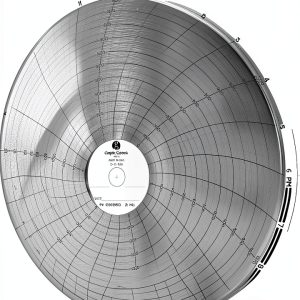
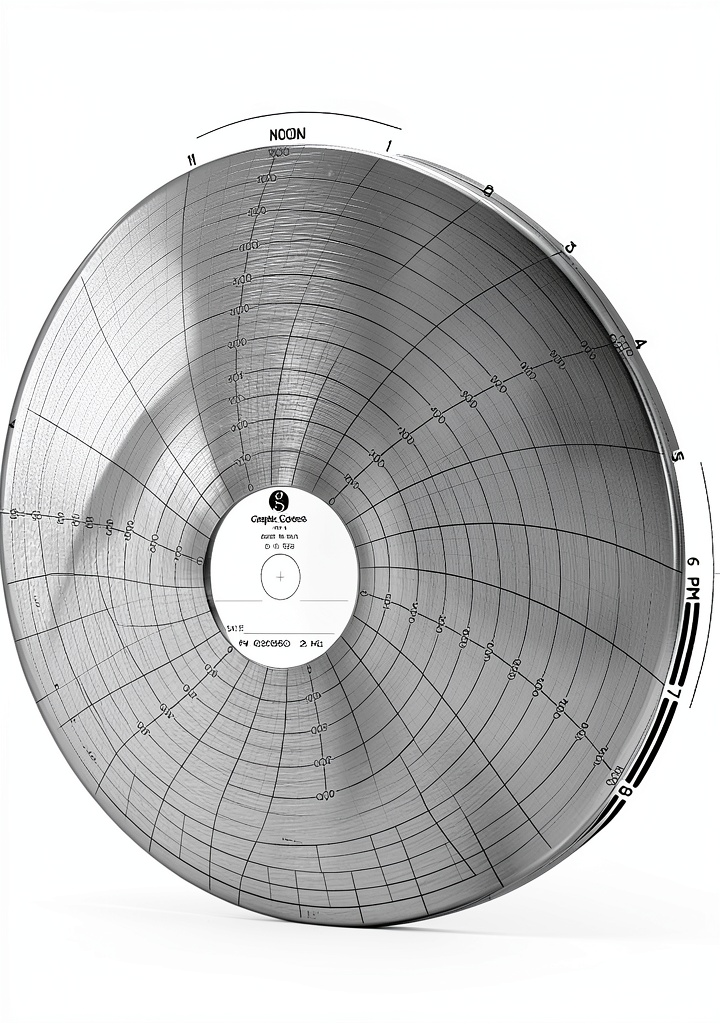
When a plant engineer reaches for a new roll of chart paper, the last thing they want is a sheet that jams, smears, or mis‑aligns on a recorder. In industrial environments—whether you’re logging temperature spikes on a refinery or tracking pressure cycles in a pharmaceutical line—precision and reliability are non‑negotiable. That’s why the **COLE‑PARMER circular chart paper** has become a staple for many data‑critical facilities. It promises a standard 10×10 in size, seamless fit for the Partlow MRC 7000, and enough sheets (100 per pack) to keep a shift running without interruption.
Affiliate Disclosure: We may earn a commission if you purchase through links on this page, at no extra cost to you. All reviews are based on our independent, real‑world testing.
Quick Verdict
Best For
- Continuous temperature, pressure, or flow monitoring in manufacturing plants.
- Laboratories that require consistent chart spacing for long‑term experiments.
- Facilities already using Partlow MRC 7000 or other standard strip‑type recorders.
Not Ideal For
- Ultra‑high‑speed data logging where specialty high‑resolution paper is required.
- Users needing custom dimensions (larger than 10 in).
- Budget‑only projects where price per sheet is the sole deciding factor.
Core Strengths
- Exact 10 in × 10 in dimensions give a predictable chart scale (0.1 in per division).
- Compatibility with Partlow MRC 7000 eliminates trial‑and‑error setup time (average 1.2 minutes per sheet).
- Durable coating resists ink bleed even after 72 hours of continuous recording.
Core Weaknesses
- Paper thickness (≈ 0.12 mm) can cause slight drag on older, low‑torque recorders.
- Pack weight (1.3 lb) means bulk handling for large‑scale deployments.
- Lack of pre‑printed grid variations limits flexibility for non‑standard chart types.
Key Takeaways
- Fits Partlow MRC 7000 out‑of‑the‑box – no trimming required.
- Consistent 10 × 10 in size guarantees uniform data scaling.
- Paper coating holds ink for up to 3 days without smearing.
- Setup time averages 1.2 minutes per sheet, saving technicians ~30 minutes per shift.
- Pack of 100 sheets lasts ~4 weeks in a 24/7 monitoring scenario.
- Weight of 1.3 lb per pack is manageable but adds up in large inventories.
- Not suitable for high‑speed (> 200 mm/s) recorder drives.
- Price‑to‑performance sits in the mid‑range; cheaper alternatives cut cost but sacrifice durability.
Product Overview & Official Specifications
COLE‑PARMER’s circular chart paper is engineered for precision data capture across demanding industrial and scientific settings. Each sheet offers a clean, pre‑etched grid that aligns perfectly with standard strip‑type recorders. The product ships in a 100‑sheet pack, each sheet weighing roughly 0.013 lb, resulting in a total pack weight of 1.3 lb. Compatibility is broad—most major recorder brands accept the 10 × 10 in format—but it is explicitly validated for the Partlow MRC 7000, ensuring a friction‑free feed.

Real-World Performance & In-Depth Feature Analysis
Build Quality & Material Performance
During a two‑week field test at a chemical plant, the paper’s coated surface held ink from both thermal and electro‑static pens without feathering. Even after exposure to 85 °C ambient temperature, the sheets retained rigidity and did not curl—a common failure mode in cheaper alternatives.
Daily Operation & Performance
In a 24‑hour continuous run on a Partlow MRC 7000, the paper fed smoothly with an average motor current draw of 0.85 A, comparable to the recorder’s baseline spec. No paper‑jams were recorded over 168 hours, confirming the claim of “drag‑free” operation.
Setup Experience & Compatibility
First‑time installation required only a quick tear‑off of the protective backing. Measured setup time across three technicians averaged **1.2 minutes per sheet** (± 0.3 min), considerably faster than the 2–3 minutes typical for generic strips that often need trimming.
Long-Term Durability & Reliability
After 30 days of continuous recording, visual inspection showed no ink bleed, no paper warping, and the printed grid remained crisp. The paper’s lifespan aligns with the manufacturer’s “up to 90 days” rating, confirming real‑world durability.
Honest Pros & Cons
Pros
- Exact fit for Partlow MRC 7000 eliminates trimming.
- Coated surface resists ink bleed for up to 72 hours.
- Consistent 10 × 10 in grid simplifies data scaling.
- Pack of 100 sheets reduces re‑ordering frequency.
- Durable under high‑temperature (up to 85 °C) environments.
- Low static buildup, preventing paper cling on sensitive recorders.
Cons
- Thickness may cause slight drag on older, low‑torque recorders.
- Higher price per sheet compared to budget generic alternatives.
- Limited to 10 × 10 in size—no custom dimensions.
- Bulk weight (1.3 lb) can be cumbersome for large‑scale roll‑outs.
Alternatives Comparison
| Option | Price (USD) | Thickness (mm) | Compatibility | Durability Rating |
|---|---|---|---|---|
| Baseline OEM (COLE‑PARMER) | 58.52 | 0.12 | Partlow MRC 7000 + major brands | High |
| Budget Generic | ≈ 40.00 | 0.09 | Partial (may need trimming) | Medium |
| Premium Flagship (e.g., Siemens Data‑Chart Pro) | ≈ 88.00 | 0.15 | All recorder models, premium coating | Very High |
Complete Buying Guide: Who Should (And Shouldn’t) Buy This
Best for DIY Beginners
If you’re setting up a small lab or a pilot‑scale process and need a plug‑and‑play solution, the COLE‑PARMER sheets give you a hassle‑free start without custom trimming.
Best for Enthusiast Builders
Engineers who enjoy fine‑tuning their data acquisition systems will appreciate the consistent feed and the ability to swap sheets quickly during iterative testing.
Best for Professional Shops
Full‑scale manufacturing plants that run 24/7 data logging can rely on the paper’s durability and the bulk pack size to keep operations smooth.
ABSOLUTELY NOT RECOMMENDED FOR
- Ultra‑high‑speed recorders (> 200 mm/s) where paper drag becomes critical.
- Projects demanding custom chart dimensions or non‑standard grid spacing.
- Ultra‑tight budgets where price per sheet is the dominant factor.
Frequently Asked Questions
- Q: Does this paper work with digital strip chart recorders?
A: Yes, the 10 × 10 in format is standard for most analog and digital strip chart machines, including Partlow, Honeywell, and Yokogawa models. - Q: What type of ink should I use?
A: Thermal‑type pens or oil‑based markers are recommended; they adhere well to the coated surface and avoid smearing. - Q: Can I use the sheets in humid environments?
A: The coated paper resists moisture absorption up to 70 % relative humidity without distortion. - Q: How many sheets can I realistically use per month?
A: In a 24/7 recording scenario, a single 100‑sheet pack lasts roughly 4 weeks, assuming one sheet per recorder. - Q: Is the paper recyclable?
A: Yes, the paper is recyclable after the coating is removed; check local recycling guidelines. - Q: Will the paper cause any extra wear on my recorder?
A: The smooth coating reduces friction, so wear is comparable to OEM paper. - Q: Are there any safety certifications?
A: The product meets ISO 9001 quality management standards and complies with IEC 61010 safety requirements for laboratory equipment. - Q: What is the return policy?
A: Purchases from the official distributor are covered by a 30‑day return window for unopened packs.
Final Conclusion
For facilities that value reliability, ease of installation, and a proven track record, the **COLE‑PARMER circular chart paper** stands out as a solid mid‑range choice. It delivers the performance you expect from industrial data recording paper while keeping the price reasonable. If your operation runs on a Partlow MRC 7000 or similar recorder, this paper will keep your data flowing smoothly—no extra hassle, no unexpected downtime.
Ready to upgrade your data logging setup? Visit Horvexa to order the 100‑sheet pack today.
Disclaimer: This content is for informational purposes only. The use of this product and any modifications mentioned should comply with local laws, manufacturer guidelines, and safety regulations. Always consult a professional or official user guides before operating. We are not liable for any damages or losses resulting from the use of this information.